La guía definitiva sobre los tipos de equipos de protección contra caídas: Garantizando la seguridad y el cumplimiento en el lugar de trabajo.
Jun 05, 2026Las caídas siguen provocando lesiones graves y muertes laborales en industrias y obras de construcción de todo el mundo. Para el jefe de proyecto, el propietario de una gran flota de equipos y el responsable de seguridad, un plan eficaz de protección contra caídas va más allá del mero cumplimiento de la normativa; puede salvar vidas y prevenir pérdidas catastróficas.
Para crear un entorno de trabajo sin daños, debe saber cómo utilizar el equipos de protección contra caídas Para proteger a sus empleados de caídas desde alturas. Al explicar los distintos tipos de equipos de protección contra caídas y cómo utilizarlos en aplicaciones específicas, podrá realizar una compra adecuada para sus necesidades de protección y hacer todo lo posible para proteger a sus empleados de posibles lesiones graves o la muerte por una caída desde alturas en su lugar de trabajo.
Antes de adentrarnos en el equipo específico, es fundamental comprender que la protección contra caídas se divide en dos filosofías operativas principales: protección pasiva contra caídas (controles de ingeniería) y protección activa contra caídas (sistemas personales).
Una estrategia de seguridad inteligente siempre prioriza la eliminación del peligro o los controles de ingeniería colectiva antes de confiar en equipo de protección personal (EPP).
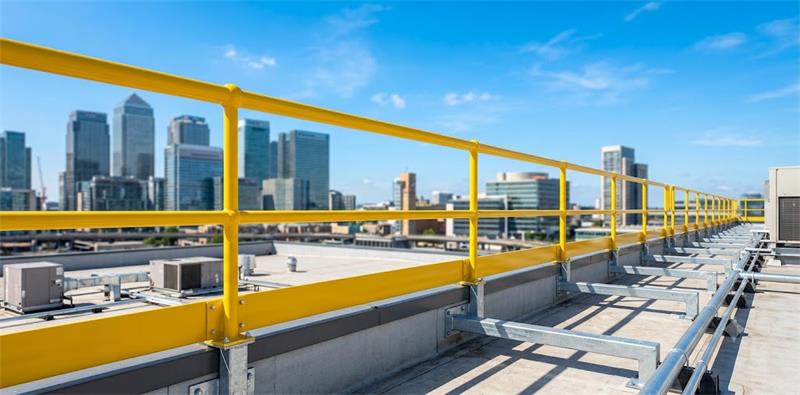
Cuando el objetivo es la seguridad colectiva en la obra, los sistemas pasivos son la primera línea de defensa. Protegen a todos los presentes en la cubierta simultáneamente, lo que los convierte en una opción muy rentable para proyectos de gran envergadura.
El método más común de protección pasiva contra caídas es el sistema de barandillas que se puede instalar a lo largo de bordes abiertos, bordes de techos y plataformas de andamios.
Las redes de seguridad son utilizadas principalmente por trabajadores que se desplazan a gran altura en zonas extensas de obras, como en la construcción de puentes o en el montaje de estructuras de acero de gran altura.
Utilizadas principalmente en techos planos o de poca pendiente, las líneas de advertencia consisten en cuerdas, cables o cadenas señalizadas a intervalos bien visibles. Forman una barrera que se instala a una distancia específica (generalmente de al menos 1,8 metros) del borde del techo para alertar a los trabajadores de que se acercan a una zona con riesgo de caída.
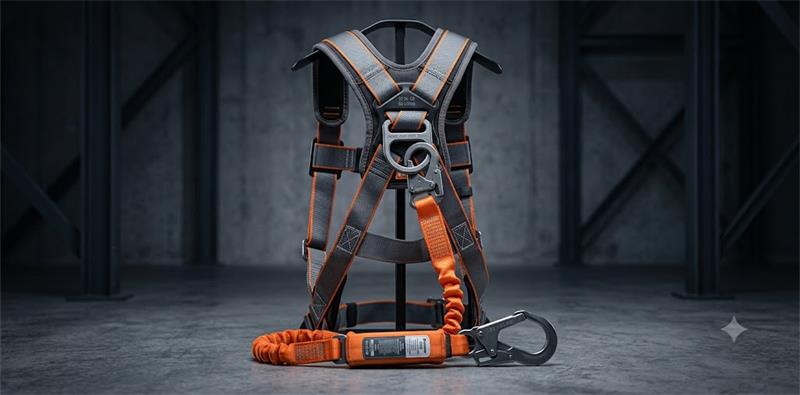
Cuando no se pueden implementar sistemas pasivos, Sistema Personal de Detención de Caídas (PFAS)se vuelve obligatorio. Un PFAS no impide que un trabajador caiga por el borde; en cambio, detiene (detiene) de forma segura una caída en el aire antes de que el trabajador llegue al nivel inferior.
Un PFAS eficaz se basa en la fórmula ABCD, donde cada componente debe funcionar a la perfección en conjunto.
+-------------------------------------------------------------+
| El ABCD de un PFAS
|+--------------------------+----------------------------------+
| A - Anclaje | El punto de fijación seguro
|| B - Ropa Corporal | El arnés de seguridad de cuerpo completo
|| C - Dispositivo de conexión | Cordones o líneas de vida autorretráctiles
|| D - Dispositivo de desaceleración | Amortiguadores para reducir la fuerza
|+--------------------------+----------------------------------+
El punto de anclaje es la base estructural segura a la que se conecta el resto del sistema.
Los sistemas de protección contra caídas deben resistir fuerzas enormes de hasta 22,2 kN por trabajador sujeto durante una caída. Por lo tanto, el diseño de ingeniería debe duplicar esta fuerza de caída para el diseño del sistema.
Tipos de anclajes SRL: Anclajes permanentes (anillas en D – acero certificado) fijados a la estructura de forma permanente, y anclajes temporales/móviles (por ejemplo, abrazaderas para vigas, anclajes de techo, carros de anclaje de gran peso).
Los sistemas de protección corporal para la detención de caídas han evolucionado con el tiempo. Actualmente, el arnés de seguridad integral es el sistema de protección corporal adecuado para este fin. Los cinturones de seguridad antiguos están estrictamente prohibidos como sistema de protección corporal para la detención de caídas, ya que pueden causar lesiones internas graves durante una caída.
Los arneses de cuerpo completo están diseñados para distribuir las fuerzas de la caída que actúan sobre el usuario hacia los puntos más resistentes de su cuerpo: los muslos, la pelvis, el pecho y los hombros.
Colocación de la anilla: Puntos de conexión de la anilla en D: La detención de caídas se realiza conectando el arnés de seguridad al sistema de protección contra caídas mediante la anilla en D dorsal, situada entre los omóplatos. Los puntos de conexión de la anilla en D esternal (del pecho) generalmente solo se permiten para su uso con un sistema de escalada guiada o para fines de rescate.
El conector se fija al punto de anclaje y suele estar equipado con un dispositivo de desaceleración para frenar la caída del trabajador.
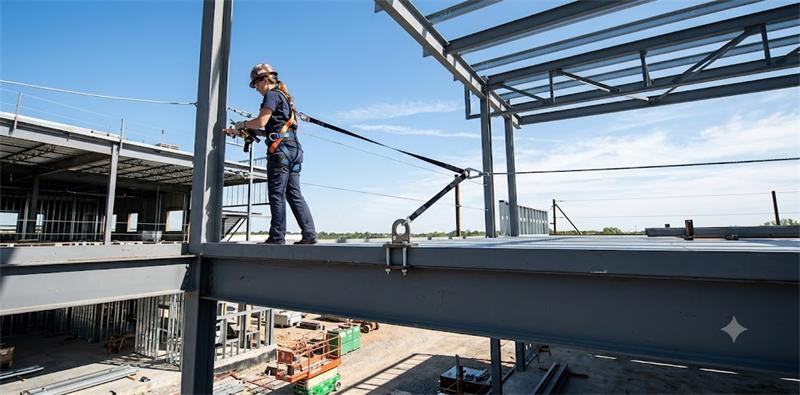
No todos los sistemas activos están diseñados para atrapar a un trabajador que se cae. Otros dos sistemas críticos están diseñados para modificar el movimiento del usuario y evitar la caída por completo.
·
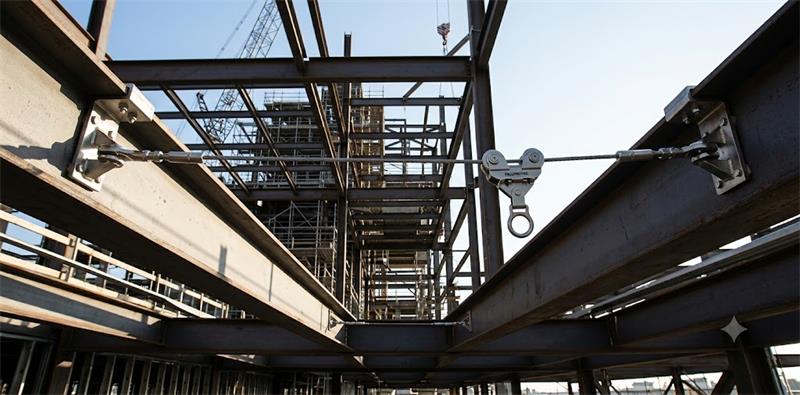
Cuando los trabajadores necesitan desplazarse horizontal o verticalmente a lo largo de grandes distancias, los puntos de anclaje fijos resultan poco prácticos. Es aquí donde entran en juego los sistemas de líneas de vida.
De nada sirve tener los mejores equipos de protección contra caídas si el equipo no recibe el mantenimiento adecuado o no está correctamente clasificado. Para cumplir con las normas de seguridad internacionales como OSHA o ANSI, aplique los siguientes protocolos:
La elección del equipo de protección contra caídas adecuado depende por completo de su entorno de trabajo específico, las limitaciones estructurales y la duración del proyecto. Ya sea que esté equipando a un equipo de construcción de rascacielos con líneas de vida autorretráctiles de alta calidad, instalando barandillas colectivas en una planta de servicios públicos o gestionando un amplio inventario de alquiler de equipos de seguridad que cumplan con la normativa, priorizar la seguridad se traduce en productividad, reputación y vidas humanas.
¿Necesita modernizar su flota con equipos de protección contra caídas fiables y que cumplan con la normativa OSHA? ¿O busca capacitar a su personal sobre el ajuste e inspección adecuados de los arneses? [Contacte hoy mismo con nuestro equipo de ingeniería de seguridad] para obtener asesoramiento experto, precios al por mayor y soluciones de equipos de primera calidad adaptadas a su sector.
¿A partir de qué altura exige la OSHA el uso de equipos de protección contra caídas?
Según las normas de OSHA, los empleadores deben proporcionar protección contra caídas en las siguientes alturas:
4 pies en general en los lugares de trabajo industriales.
5 pies en astilleros.
6 pies en la industria de la construcción.
10 pies cuando se trabaja en andamios.
Independientemente de la distancia, siempre se debe proporcionar protección contra caídas cuando se trabaje por encima de equipos o maquinaria peligrosos.
¿Se puede reutilizar un arnés de seguridad después de haber sufrido una caída?
Correo electrónico : aj-steven@dghualifeng.com.cn


Friendly Links :
Kitchen Cabinet© 2026 Material de construcción Co., Ltd de Guangzhou AJ Reservados todos los derechos


 en
en fr
fr es
es