Seguridad en andamios y escaleras: La guía definitiva para prevenir caídas y garantizar el cumplimiento de las normas en la obra.
May 26, 2026La seguridad en obras de construcción comerciales e industriales es fundamental para el buen funcionamiento de cualquier negocio. De todos los peligros potenciales que se encuentran en las obras, pocos se comparan con los riesgos de trabajar en altura, dada su capacidad para provocar accidentes y lesiones graves. Acceso al andamio mediante escalera. Es posiblemente el aspecto de seguridad más crítico en cualquier obra y uno que debe abordarse para prevenir accidentes, cumplir con los plazos del proyecto y evitar posibles responsabilidades.
Muchos incidentes relacionados con andamios ocurren al subir y bajar las escaleras que dan acceso a los mismos. andamios y plataformas de trabajoPor lo tanto, proporcionar sistemas de acceso seguros al utilizar andamios es un elemento fundamental para gestionar de forma segura el lugar de trabajo en las obras de construcción modernas.
Esta guía explica los pasos necesarios para gestionar y reducir los riesgos asociados al acceso a andamios y para seguir las mejores prácticas, garantizando el cumplimiento de la normativa vigente. Siguiendo la información proporcionada, podrá crear un área de trabajo segura y trabajar de la manera más eficiente.

La seguridad comienza mucho antes de que un trabajador acceda a la obra; empieza durante la fase de adquisición y planificación. Seleccionar el sistema de acceso adecuado es fundamental para la integridad estructural y la confianza del usuario.
Existen tres tipos principales de escaleras que se utilizan para acceder a las plataformas de andamios:
Al adquirir equipos, asegúrese de que todas las escaleras cumplan con las normas internacionales de fabricación (como OSHA 1926.451 o EN 12811). El uso de equipos de baja calidad o muy desgastados aumenta drásticamente el riesgo de fallas estructurales bajo carga.
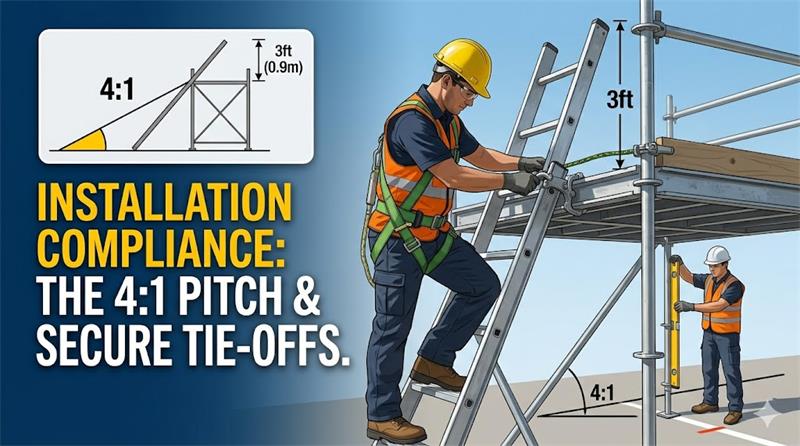
La seguridad de una escalera de alta calidad depende de su correcta instalación. La gran mayoría de los accidentes por vuelco se deben a escaleras mal inclinadas o sin asegurar. Al montar sistemas de acceso con andamios, los jefes de equipo deben hacer cumplir las siguientes normas de montaje innegociables:
Para escaleras extensibles portátiles apoyadas contra un andamio, mantenga una proporción precisa de 4:1. Por cada 1,2 metros de altura vertical, la base de la escalera debe extenderse 30 centímetros hacia afuera de la estructura. Esto crea un ángulo estable de 75°, minimizando el riesgo de que la escalera se deslice o se vuelque hacia atrás.
Nunca apoye una escalera simplemente contra la plataforma del andamio. La parte superior de la escalera debe estar firmemente sujeta a la estructura del andamio mediante acoplamientos de alta resistencia o soportes diseñados específicamente para ello.
Si los trabajadores pasan de una escalera exterior a una plataforma de andamio, los rieles laterales de la escalera deben extenderse al menos 0,9 metros (3 pies) por encima de la plataforma. Esto proporciona un punto de apoyo continuo, lo que permite a los trabajadores mantener el equilibrio al subir a la plataforma.
El desgaste ambiental, el uso intensivo diario y los impactos accidentales pueden comprometer la seguridad de las escaleras durante la noche. Implementar una lista de verificación estricta para la inspección de andamios antes de cada turno es la medida preventiva más eficaz contra fallas en el equipo.
Al realizar las inspecciones diarias, los inspectores deben centrarse especialmente en los siguientes componentes:
Punto de inspección | Qué buscar | Acción requerida |
Peldaños y escalones | El barro, la grasa, el aceite, el hielo o las soldaduras estructurales se están agrietando. | Limpie inmediatamente o coloque la escalera bajo la etiqueta "Fuera de servicio". |
Ganchos/abrazaderas de conexión | Pernos sueltos, ganchos metálicos deformados o pasadores de bloqueo faltantes. | Apriete o reemplace los herrajes antes de permitir el acceso. |
Puertas de seguridad / Aberturas de acceso | Puertas batientes de cierre automático que se quedan abiertas o carecen de tensión. | Lubrique las bisagras o reemplace los resortes para asegurar el cierre automático. |
Barandillas laterales | Deformaciones, abolladuras profundas o corrosión estructural en acero/aluminio. | Las escaleras defectuosas deben retirarse permanentemente de la obra. |
Consejo profesional:Utilice un sistema de etiquetado resistente a la intemperie (Verde = Seguro de usar, Rojo = Peligro/No usar) fijado directamente a la base de la escalera del andamio. Esto proporciona una visibilidad inmediata para todo el equipo.
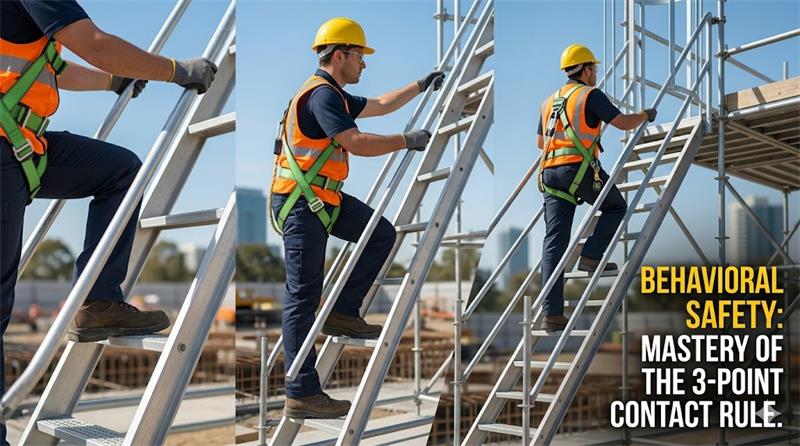
Incluso la estructura de andamios más robusta y que cumpla con las normas no puede eliminar por completo el riesgo si el comportamiento de los trabajadores es imprudente. Los programas de capacitación deben reforzar continuamente los hábitos de escalada seguros.
Para mantener una seguridad óptima durante las transiciones verticales, implemente estas directrices operativas:
Priorizar la seguridad en andamios y escaleras es más que una obligación legal: es una estrategia empresarial inteligente. Los resbalones y caídas desde alturas provocan graves retrasos en los proyectos, costosos litigios, aumentos en las primas de seguros y daños a la reputación corporativa. Al invertir en equipos de alta calidad que cumplen con la normativa, aplicar normas de instalación estrictas y mantener una rigurosa rutina de inspección diaria, protege su activo más valioso: su personal.
¿Busca modernizar su próximo proyecto con sistemas de andamiaje certificados y de alta resistencia? ¿O necesita reemplazar equipos obsoletos con equipos fiables que cumplan con la normativa?
[Póngase en contacto con nuestro equipo de ingeniería hoy mismo]Para solicitar un presupuesto personalizado, explore nuestras opciones de venta al por mayor o programe una consulta de seguridad integral para su próximo proyecto.
P1: ¿Cuál es la capacidad de carga máxima de una escalera de acceso estándar para andamios?
P2: ¿Está permitido que los trabajadores trepen a los andamios en lugar de usar una escalera?
P3: ¿Con qué frecuencia deben inspeccionarse las escaleras de andamio en una obra comercial?
Correo electrónico : aj-steven@dghualifeng.com.cn


Friendly Links :
Kitchen Cabinet© 2026 Material de construcción Co., Ltd de Guangzhou AJ Reservados todos los derechos


 en
en fr
fr es
es