¿Cuál es la capacidad de carga de los andamios de aluminio? El recurso completo para un uso seguro y eficiente.
Apr 18, 2026Andamios de aluminio Actualmente, los andamios de aluminio son un componente común y ampliamente utilizado en las actividades modernas de construcción y mantenimiento que requieren flexibilidad, soluciones de bajo costo y resistencia a la degradación ambiental. Sin embargo, la pregunta más importante que todos los gerentes de proyecto, representantes de seguridad y clientes deben considerar antes de usar andamios de aluminio es: ¿Qué peso se puede colocar de forma segura sobre un andamio de aluminio?
Calcular mal el peso que un andamio puede soportar de forma segura pone en riesgo la obra (un desastre catastrófico) o genera ineficiencia en sus operaciones (ineficiente). Para ayudarle a comprender mejor las diferencias en la determinación de la capacidad de carga, las normativas de seguridad en distintos países y las diferencias entre el aluminio y el acero, esta guía detallada le proporciona toda la información necesaria para que sus proyectos sean seguros y productivos.
La capacidad de carga es el peso máximo que se puede añadir a un andamio sin sobrepasar sus límites y provocar su fallo. La carga total que puede soportar un andamio incluye a todos los trabajadores que se encuentren en él, así como las herramientas y los materiales que haya sobre él.
El aluminio es una opción atractiva para andamios debido a su alta relación resistencia-peso, pero sus propiedades de ingeniería presentan limitaciones que exigen el cumplimiento estricto de las normas de ingeniería. En cuanto a la seguridad de uso, los ingenieros utilizan la Carga de Trabajo Segura (CTS) para determinar cómo usar el andamio de forma segura. La CTS incluye un factor de seguridad (generalmente de 4 a 1) para tener en cuenta las cargas dinámicas, como caminar sobre el andamio o el viento. Superar la CTS constituye una infracción de seguridad y genera riesgos de falla estructural.
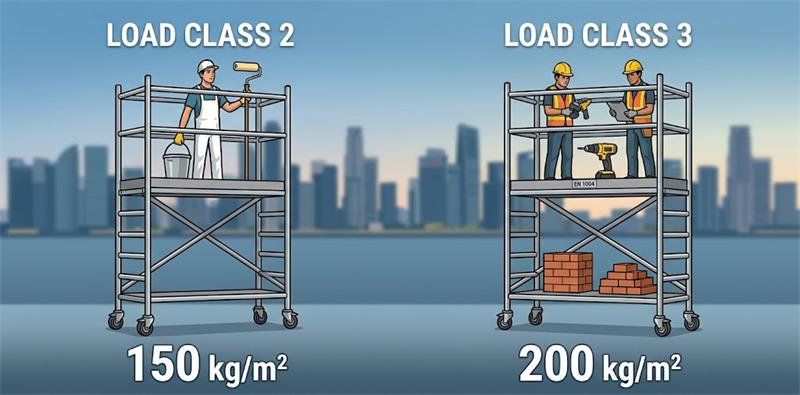
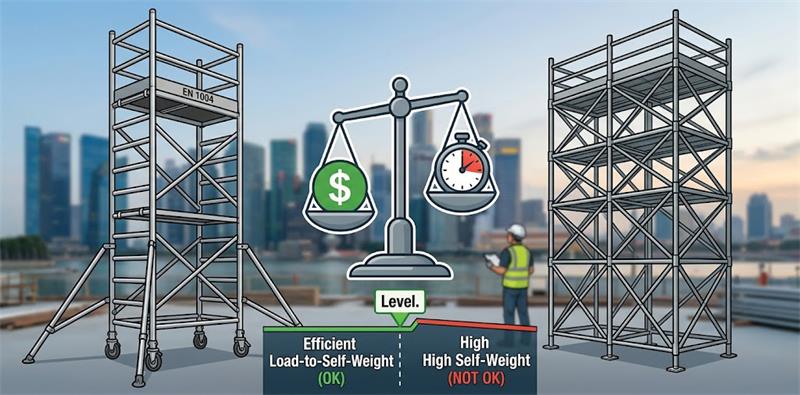
Las torres móviles de aluminio de alta calidad suelen cumplir con la norma de diseño y ensayo EN 1004. Esta norma, de reconocimiento internacional, clasifica todos los andamios en categorías de "clases de carga" según su capacidad de carga por metro cuadrado.
Consejo profesional: Consulte siempre la placa de identificación del fabricante. Un andamio de torre legítimo, fabricado según la norma EN 1004, incluirá la clasificación de seguridad, la altura máxima de la plataforma y el peso total máximo que puede soportar la torre.
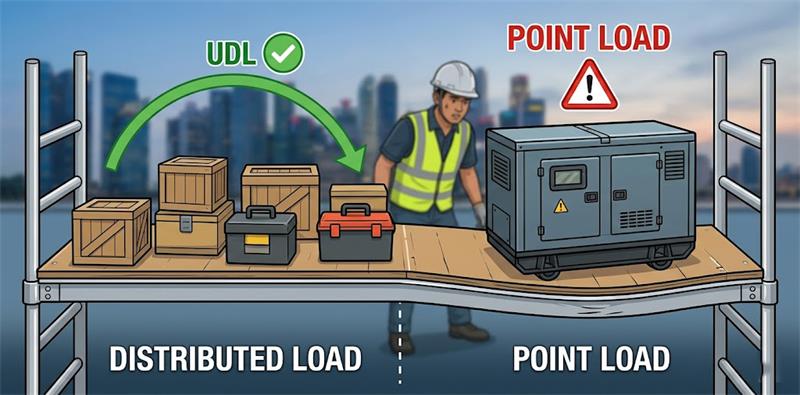
Uno de los errores de cálculo más frecuentes en las obras es la mala interpretación de cómo se distribuye la carga en la plataforma. Es fundamental comprender la física de la distribución de cargas para evitar posibles fallos en la plataforma debido a la rotura de la estructura.
200 kg/m2 x 1,2 m2 = 240 kg de capacidad total.
Por lo general, las consideraciones para seleccionar una aplicación para cualquiera de estos materiales tendrán poco que ver con cuál es "mejor" y más con cuál es el "correcto" en función de los requisitos de carga de la estructura.
Al comparar el acero con el aluminio, la principal diferencia radica en la densidad y la capacidad resultante. El acero suele tener una densidad mayor que el aluminio, lo que proporciona una mayor capacidad de carga total (comúnmente clasificada como Clase 4 o Clase 5) para cargas de hasta 600 kg/m³.2Por lo tanto, el acero es el material preferido para aplicaciones de mampostería pesada y apuntalamiento. En cambio, la ventaja de usar aluminio sobre el acero radica en la relación eficiencia-carga del aluminio.
Característica | Andamios de aluminio | |
Clase de carga típica | Clase 2 y 3 (150-200kg/m2) | Clase 4, 5 y 6 (300-600 kg/m2) |
Carga muerta | Muy bajo (1/3 del peso del acero) | Una altura elevada añade tensión a la estructura base. |
Velocidad de ensamblaje | Rápido; no se necesitan herramientas ni grúas. | Lento, laborioso y pesado. |
Corrosión | Altamente resistente; ideal para exteriores. | Propenso a oxidarse si no está galvanizado. |
El acero tiene un módulo de elasticidad más alto, lo que le confiere mayor rigidez. El aluminio, al ser más flexible, puede presentar un ligero rebote. Si bien esto es matemáticamente seguro dentro de la carga de trabajo segura (SWL), requiere que los trabajadores reciban la capacitación adecuada sobre el comportamiento del equipo para mantener la confianza en altura.
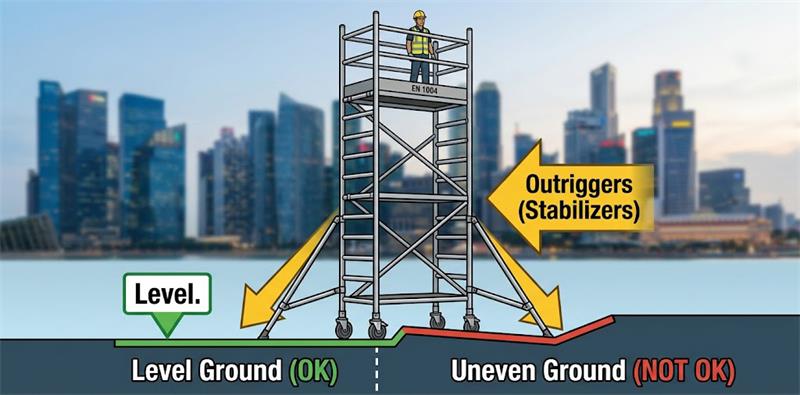
La capacidad nominal de un andamio solo es válida si la estructura está construida correctamente. Varios factores pueden reducir su margen de seguridad:
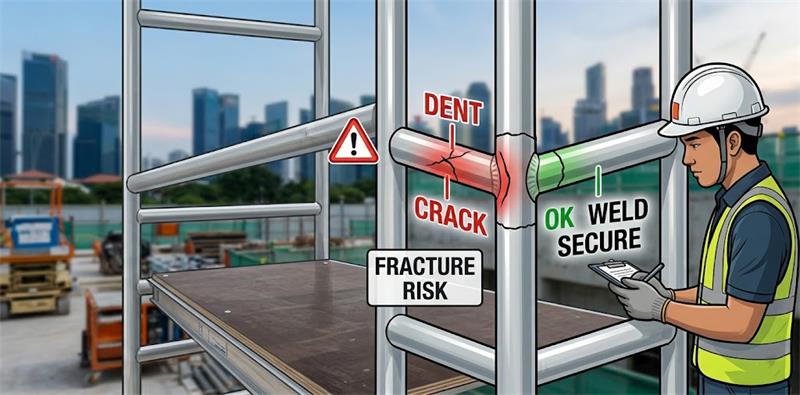
Para garantizar que su andamio de aluminio cumpla siempre con su capacidad nominal, las inspecciones periódicas son obligatorias. Preste atención a lo siguiente:
Para comprender los límites de carga de un andamio de aluminio, no solo es necesario cumplir con la normativa, sino también facilitar la realización de tareas que normalmente requerirían más personal que si tuvieran que transportar esas cargas a diario. Un andamio de aluminio de Clase 3 tiene un peso de embalaje que lo hace portátil para su uso en proyectos de construcción ligera a media, mantenimiento de fachadas (exteriores) e interiores. Gracias a su portabilidad y capacidad suficiente, ofrece un retorno de la inversión superior en comparación con el acero de alta resistencia.
Consulte siempre las especificaciones del fabricante en cuanto a cargas, distribución y punto de apoyo, y capacite a sus trabajadores para que sepan reconocer las diferencias entre ellas.
¡No confíe en la suerte para su seguridad! Nuestro equipo cualificado le ayudará a seleccionar la solución más adecuada de nuestra amplia gama de opciones de alquiler y venta de andamios de aluminio de alta resistencia, además de brindarle orientación sobre la adquisición de equipos que cumplen con la normativa EN 1004. Para recibir una propuesta personalizada y una revisión exhaustiva de la seguridad de los equipos, por favor, [Póngase en contacto con nuestro equipo de ingeniería] ¡hoy!
Correo electrónico : aj-steven@dghualifeng.com.cn


Friendly Links :
Kitchen Cabinet© 2026 Material de construcción Co., Ltd de Guangzhou AJ Reservados todos los derechos

 en
en fr
fr es
es